AMPHIBIAN MONITORING

AMPHIBIANS OF WASHINGTON

Over the last several decades, amphibians – including frogs, toads, salamanders and newts – have experienced the highest rate of species decline among vertebrate animals. These losses have occurred due to impacts such as wetland loss, disease, pollutants, invasive species and climate change.

Community volunteers help collect scientific data by observing amphibians in local conservation wetland areas. Each year our Amphibian Monitoring volunteers log hundreds of observations of amphibians across western Washington in the iNaturalist online collection of biodiversity observations. iNaturalist is a global community of people who assist conservation efforts by recording observations of organisms and share them with each other to gain a better understanding of the natural world.

What are we looking for?

We’re monitoring for eight different species of frogs, toads and salamanders:
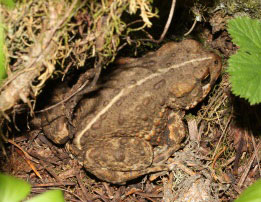
A brown toad with bumpy skin and a light stripe down its back sits camouflaged among dried leaves, twigs, and moss on the forest floor.
Western toad
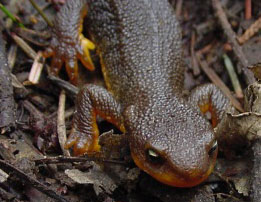
A close-up of a rough-skinned newt with bumpy, brownish skin and orange limbs, crawling on damp soil with scattered leaves and twigs.
Rough-skinned newt
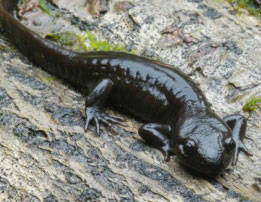
A shiny black salamander with four legs and a long tail rests on a textured, mossy log.
Northwestern salamander
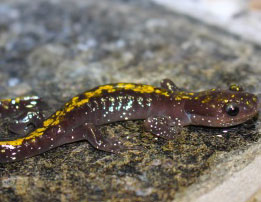
A small, dark-colored salamander with yellow spots and a shiny, moist skin rests on a rocky surface.
Long-toed salamander
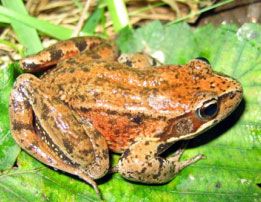
A brown and orange frog with dark spots sits on a green leaf, surrounded by grass and plant debris.
Red-legged frog
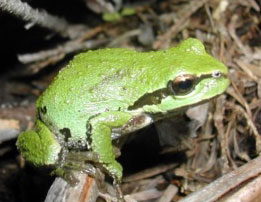
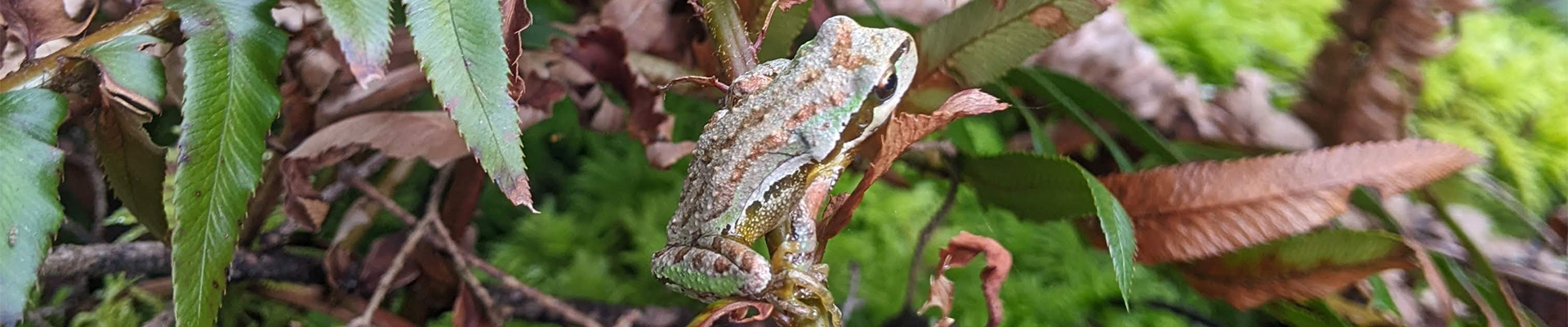
A close-up of a small green frog sitting on a stick among dried leaves and twigs. The frogs skin appears moist and slightly bumpy.
Pacific treefrog
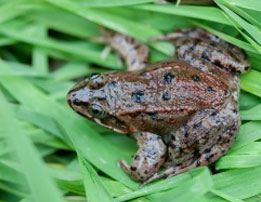
A brown frog with dark spots sits on green blades of grass, blending into its surroundings.
Oregon spotted frog
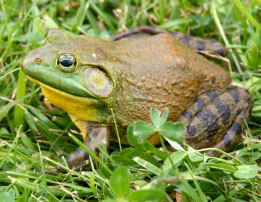
A green and brown frog with mottled skin sits on lush green grass, surrounded by clover leaves and blades of grass.
American bullfrog Invasive!

ABOUT THE PROGRAM

Local Communities Contributing to Global Conservation

Each year since 2012, approximately 100 volunteers have monitored 17 sites for evidence of breeding amphibians. Volunteers log data in the Amphibians of Washington project on iNaturalist, where project curators verify the observations. These observations help us understand where our local amphibians are – and aren’t – breeding across the region.

Take a look at what our community scientists have accomplished!

Hope for Native Amphibians

Three people wearing rain jackets and waders lean over wet ground, examining something closely in a marshy area with tall brown grass and muddy water.

Community Volunteers

Volunteers are trained to identify egg masses of eight species of frogs, toads, newts and salamanders. This includes the Oregon spotted frog, a state endangered species, and the American bullfrog, an invasive species that negatively impacts other amphibians.

Three people walk through tall grass in a field near a forest, carrying containers and equipment, dressed in outdoor clothing. The scene appears to be part of a fieldwork or research activity.

Supporting Local Habitats

A majority of Amphibian Monitoring community scientists report increased appreciation for local amphibians and their wetland site as a result of their participation.

A woman in waders releases frogs from a plastic container in a grassy wetland, while two other people observe and take photos in the background. Pine trees are visible behind them under a cloudy sky.

Scientific Data

Verified observations from the Amphibians of Washington iNaturalist project are rolled into the Global Biodiversity Information Facility, an international organization that makes scientific data on biodiversity broadly available via the Internet.

WHAT YOU CAN DO

Want to get involved?

Amphibian monitoring training is an exciting opportunity to get hands-on experience with amphibian conservation while increasing your connection to local ponds and wetlands and contributing to authentic scientific research.

Join the interest list for participating next season!


Protect Local Wetlands!

Here are a few impactful actions everyone can take to help protect amphibians and their wetland homes:


  • Don’t Let it Loose: Don’t release pets or domestic plants into the wild! Many will die in the wild, but those that survive have the potential to outcompete native wildlife, causing many problems for our local amphibian populations. The Don’t Let it Loose campaign has tons of tips on what to do if you have a pet or plant you can no longer care for.
  • Play, Clean, Go: Clean your gear between sites to avoid accidentally moving invasive species while you are outside enjoying nature! Staying on trail and removing any plants, animals, and mud from your gear, your pets, and yourself is a great way to keep amphibians’ homes healthy!

MORE WAYS TO HELP