
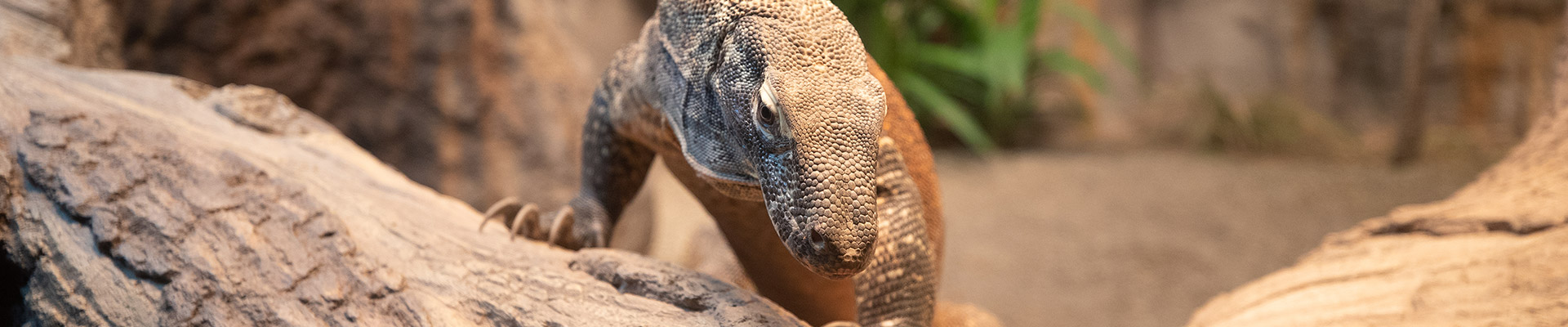
Explore this new Indo-Pacific Islands forest habitat showcasing our Komodo dragons in addition to a variety of snakes, lizards, amphibians and other reptiles!
This massive reptile is the largest living species of monitor lizard in the world. These cunning carnivores are known for their keen sense of smell and their potentially deadly bite. They have a mouth full of sharp teeth and saliva that contains dangerous bacteria and—as recent research suggests—toxic, venom-like proteins that weaken and eventually kill their prey.
These vibrantly colored lizards get their name from the bright yellow quince fruit. Quince monitors move swiftly through the trees of the forest and are excellent climbers. They are active during the day, searching for food, while tasting the air with their long-forked tongues.
Most tortoises bask in the sun, but the giant forest tortoise prefers the shade. These critically endangered reptiles play an important role in the ecosystem by dispersing seeds on the forest floor. Although they mostly eat plants, these omnivorous giants will also eat invertebrates and frogs.
Some skinks burrow, but this skink climbs—it’s arboreal! Of the 1,500 or more skink species in the world, this one is the largest.
Most frogs go through metamorphosis, but not this one! These leaf frogs hatch from their eggs as tiny, fully developed frogs, skipping the tadpole stage entirely.
These fast lizards can scale a tree in minutes, thanks to their long limbs, elongated toes, sharp claws and prehensile, grasping tails. Black tree monitors are intelligent, skilled hunters with excellent eyesight. After spotting prey, they will chase it through the tree canopy with incredible ease and agility!
Active at night, these nocturnal constrictors ambush small reptiles, birds, mice and rats. During the day, they often bask in the treetops, regulating their temperature in the sun, while they digest their food and prepare for another late-night snack. Adult Timor pythons are about five to eight feet long.
This hydrosaurus or “water lizard” spends the day climbing trees near rivers in the forest. If a predator approaches, they make a quick aquatic escape, jumping into the water to swim and rest until the coast is clear.
