
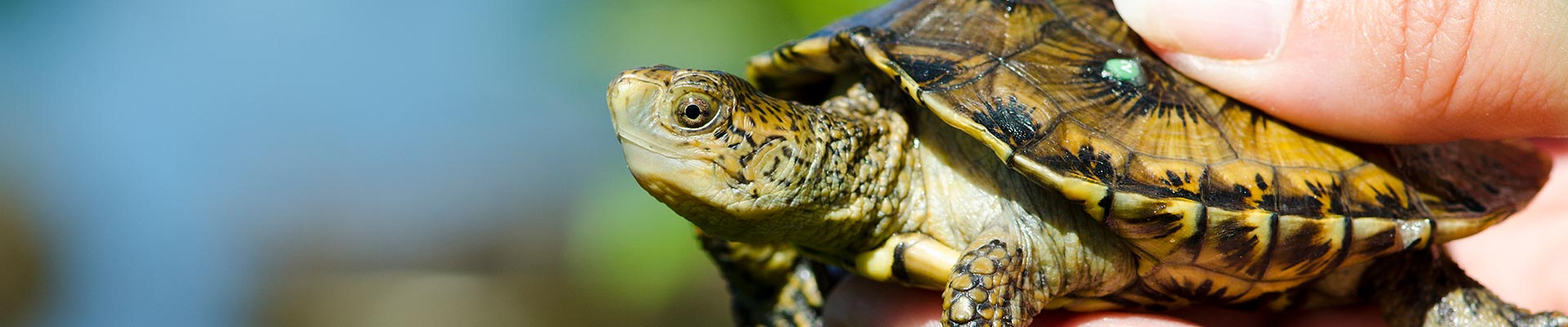
WESTERN POND TURTLE RECOVERY PROJECT
Saving turtles in the heart of Washington wetlands
For the western pond turtle, recovery is possible thanks to a collaborative effort between Pacific Northwest stakeholders determined to give these local gems a head start. Knocked out by predators, loss of habitat and invasive species, the western pond turtle population hit a devastating low of 150 turtles in Washington in 1990. But now, this native species is poised for a comeback. For three decades, Woodland Park Zoo has partnered with Washington Department of Fish and Wildlife, Oregon Zoo and others to give these turtles a fighting chance. Today, successful reintroduction has brought that population up to 800 thriving at six sites.
Without the collaborative efforts of Woodland Park Zoo and the Oregon Zoo’s head starting programs, it is very likely that the western pond turtle would be extinct in the wilds of Washington.
The western pond turtle (Actinemys marmorata) is one of only two freshwater turtles native to the Pacific Northwest (the other being the painted turtle [Chrysemys picta]). It suffered dramatic population declines due to a combination of factors, including habitat alteration and invasive bullfrogs that eat hatchling turtles.
The Western Pond Turtle Recovery Project was formed to address these threats. Each spring, project leaders and volunteers live-trap turtles in the field, fitting adult females with transmitters in order to track them to their nests later in the season. After several months, volunteers and project leaders return to collect the eggs and any young turtles that have hatched, taking them to Woodland Park Zoo or the Oregon Zoo for head starting. The tiny turtles spend their first 11 months raised in the safety of the zoo until they are large enough to avoid invasive predators such as invasive bullfrogs. Once the turtles are examined by veterinary staff, and some fitted with transmitters, they are released to their previous home site to rebuild their wild populations. It’s the best way we have to give them a fighting chance at surviving.
Despite the population increase success over the past 25+ years, project managers are concerned about continued predation threats from invasive bullfrogs and limited habitat availability for population recovery.
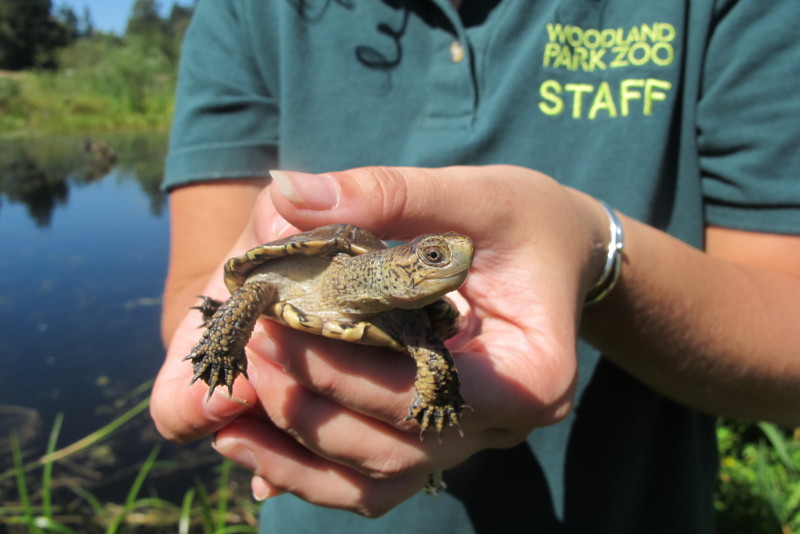
Collaborative recovery efforts over the last three decades have resulted in more than 2,300 turtles being head started and self-sustaining populations re-established in two regions of the state: Puget Sound and the Columbia River Gorge. Surveys indicate that approximately 800 of the released turtles have survived and continue to thrive at six sites. Come meet our current batch of turtle hatchlings in the zoo’s Living Northwest Trail in the Basecamp Northwest building!
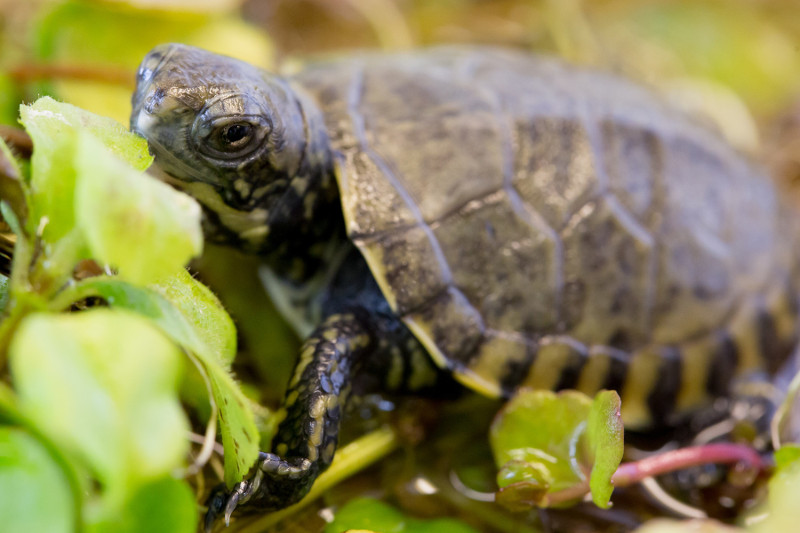
In 2016, the Western Pond Turtle Recovery Project was awarded AZA’s prestigious North American Conservation Award, and the program was one of the first AZA Saving Animals from Extinction (SAFE) projects.
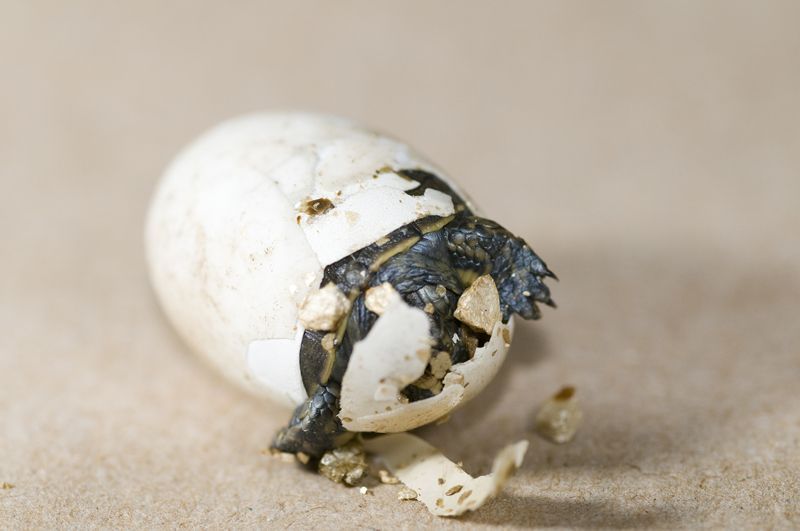
Woodland Park Zoo head started and released approximately 35 Western pond turtles in August 2023. Head starting for release allows turtles to grow large enough to avoid predation by bullfrogs and other invasive species.
Along the west coast of North America, there are two species of western pond turtles – the northwestern pond turtle (Actinemys marmorata) with a current range from central California north to Washington state and the southwestern pond turtle (Actinemys pallida) with a current range from central California south to Baja California, Mexico. These aquatic turtles live in streams, ponds, lakes and wetlands. In the few remaining locations where these turtles are found, they can be seen basking on logs, rocks or floating vegetation. These omnivorous turtles dine on insects, crayfish, and other aquatic invertebrates. Fish, tadpoles, small frogs and carrion are also eaten as the opportunity arises. When it comes to plants, turtles prefer algae, lily pads, tule and cattail roots. The youngest turtles are primarily carnivorous, and eat both insects and carrion.
The western pond turtle has also been known as the Pacific pond turtle, western mud turtle, Pacific mud turtle, Pacific terrapin, and Pacific freshwater turtle. Typically a medium-sized turtle, with color varying geographically and with age, turtles in the northern part of the range are darker in overall coloration. In general, females have smaller heads, less heavily-angled snouts, relatively higher and rounder carapace, and thinner tails. Living up to 50 years, female turtles begin reproducing between the ages of 8 to 12 years old, digging shallow nests to lay a clutch of 2 – 13 eggs.
Non-native bullfrogs are a major threat to these young turtles, devouring the quarter-sized hatchlings. To reduce predation by bullfrogs, the project removes bullfrog egg masses from protected sites. From 1990 to 2000, 2 to 3-year-old turtles were hardly ever seen in the wild. Due to these eradication efforts, we are now beginning to see this age-range of wild-hatched turtles.
We are watching the western pond turtle’s comeback unfold before our eyes. Turtles need clean water, safe places to nest, and a healthy food supply to survive.
You can help make these things possible by taking a few simple actions at home:
When it comes to pet turtles, inexperienced owners all too often end up releasing unwanted turtles into the wild, which can spread disease and lead to non-native species competing with local wildlife. Most frequently, turtles observed in urban areas of western Washington are non-native red-eared sliders (also called pond sliders). These turtles are native to the eastern United States and their populations in Washington are the result of released or escaped pets. It’s important to know that is illegal in Washington to release pets into the wild or to release non-native species into state waters. Call your local animal shelter to find a new home for an unwanted pet or better yet, think before you buy. You can find more on responsible pet rehoming at: https://invasivespecies.wa.gov/campaigns/dont-let-it-loose/
Keep our local waters clean by eliminating chemical pesticides from your gardening practices. Pesticides get into water, and once water flows away from your garden, it eventually empties into surrounding water systems—from freshwater ponds to the Puget Sound—bringing contaminants into wildlife habitat. Research organic and green ways to keep your garden flourishing and help wildlife.
Make a better home for native wildlife: Join a habitat restoration program in your community, or start in your own backyard by using native plants that nourish and support local wildlife rather than compete with it.
If you are interested in reporting a Western pond turtle sighting, view our FAQ for more information about wild turtles and how you can assist Washington Department of Fish and Wildlife in their recovery efforts.