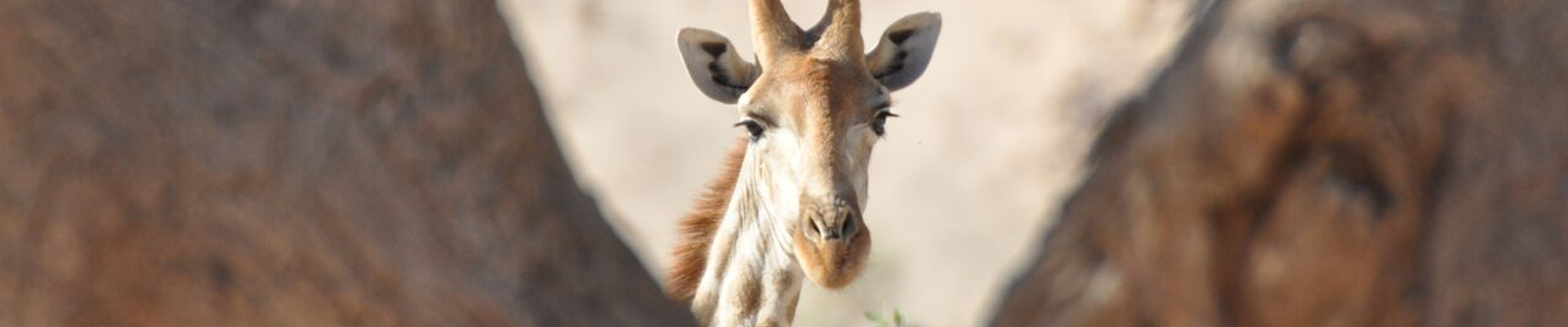
AFRICA’S GIRAFFES
Giraffe Conservation Foundation
Sticking our neck out for wild giraffes
SAVING GIRAFFES
The Giraffe Conservation Foundation’s objective is to raise awareness and support towards securing a future for giraffes and the conservation of their habitat in Africa. All work is science-based and provides innovative approaches to saving giraffes by identifying key threats and solutions, cooperating with communities, and collaborating with local, national, and international partners on conservation efforts in the best interest of giraffe conservation in African range states.
PARTNER SPOTLIGHT
Giraffe Conservation Foundation
A Woodland Park Zoo Conservation Partner
Genetic research done by the Giraffe Conservation Foundation indicates that rather than just one species of giraffe, there are four highly distinct groups; Masai, Southern, Northern, and Reticulated, with multiple subspecies.
Due to a 40% population decline over the past 30 years, the US Fish and Wildlife Service is considering listing the giraffe as Endangered or Threatened under the Endangered Species Act. With all giraffe populations in decline across their range, IUCN recently confirmed that two giraffe subspecies are now Critically Endangered, one Endangered, two Vulnerable and one Near-Threatened. That indicates a critical need to increase giraffe conservation efforts.
Good News for Giraffes

Fund Raising
Funds raised on World Giraffe Day every June 21 (the longest day for the tallest animal) allow rangers in Kenya to purchase much-needed monitoring equipment to be used in their fight against poaching.
Education
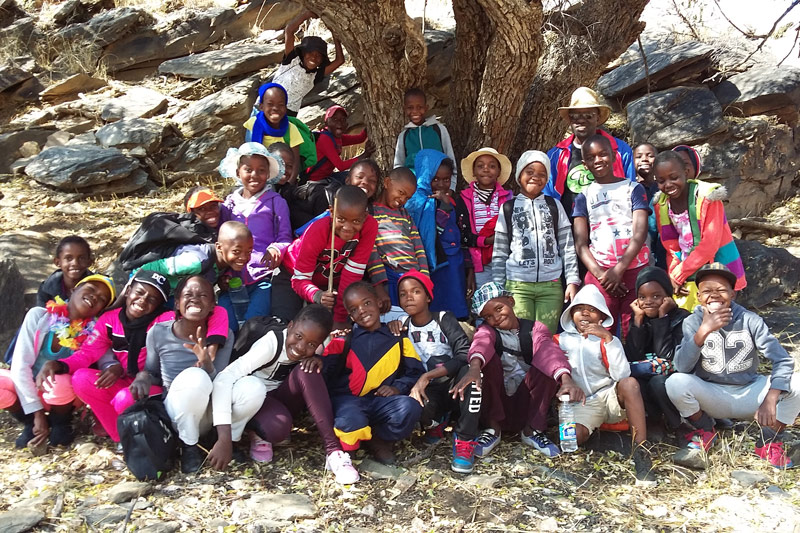
Khomas Environmental Education Programme (KEEP) is a field-based environmental education program run by the Giraffe Conservation Foundation that allows young people to reconnect with nature. In its first three years, over 6,500 school children and their teachers have participated in the field days.
Conservation
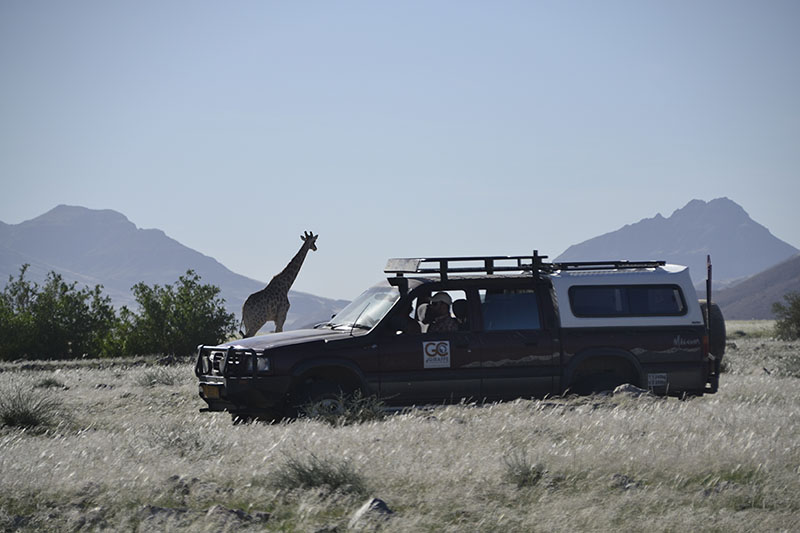
In May 2018, 35 giraffe experts gathered with African governmental representatives to develop a unifying Africa-wide Giraffe Conservation Science Management Framework. Thematic areas include taxonomy, ecology, health, and human dimensions.
WHAT YOU CAN DO
Learn About Giraffes
- Giraffes are the world’s tallest mammals with adult height ranging from 14 to 19 feet tall.
- Just like human fingerprints, no two giraffes have the same coat pattern.
- Giraffe tongues are bluish-purple and between 17 and 19 inches long.
- Their average height at birth is 6 feet and they can typically stand and often even run within hours after birth.
- Both male and female giraffes have horns already at birth. These ossicones lie flat and are not attached to the skull to avoid injury at birth. They only fuse with the skull later in life.
- Like all mammals, including humans, giraffes have seven neck vertebrae. Each one of theirs can be more than 10 inches long.