ZOO CLOSURE
The zoo will be closed July 16 and 17, 2026 for a private event.
ZOO CLOSURE
The zoo will be closed July 16 and 17, 2026 for a private event.
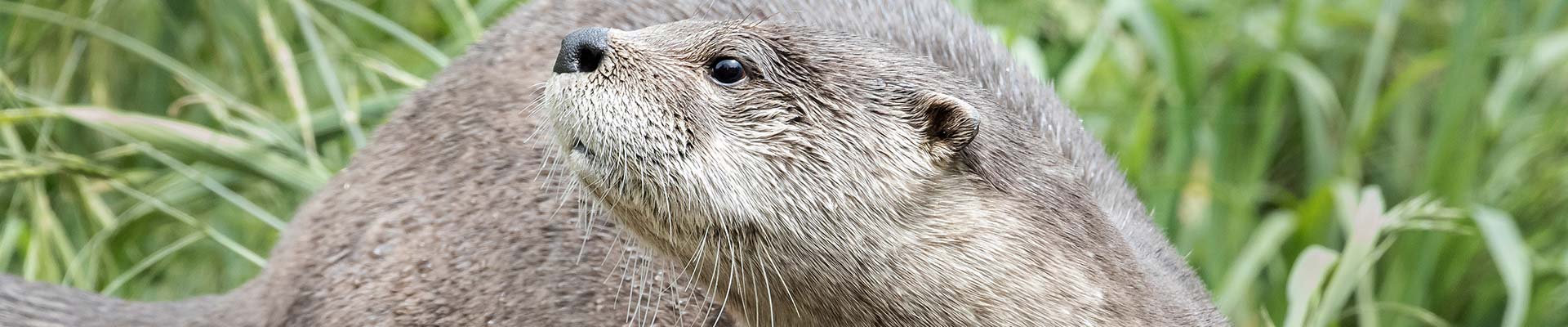
Woodland Park Zoo’s otter project has concluded, but we welcome you to continue to submit otter sightings on our new Carnivore Spotter site
Thousands of Seattle-area residents have already joined the movement to discover wildlife all around them by logging their carnivore spotting’s. Visit Carnivore Spotter now to report your local carnivore sightings and explore sightings throughout Seattle!
For the best experience, please use the Carnivore Spotter in Chrome or Firefox.
From 2016 to 2019, Woodland Park Zoo was engaged in a river otter research project in King County. We asked for your help in reporting otter sightings around the region. Thank you for submitting more than 1,100 sightings to Otter Spotter! Your sightings and information made Otter Spotter a huge success, and supported valuable research on river otter ecology and environmental health. While our otter project has concluded, you can explore otter sightings reported to Otter Spotter from April 2016 to July 2019 in the map below. See below for further results from the river otter research project.
The Green River flows from undeveloped Washington wildland through increasingly urbanized areas to become the Duwamish River—Seattle’s major industrial corridor since the early 1900s. Along the entire 92+ mile route, one mammal that calls the river home can serve as a telling indicator of the health of this critical waterway—the North American river otter.
The Lower Duwamish Waterway (LDW)—the final 5 miles of the river as it empties into Puget Sound—has a complex history and challenging future. The US Environmental Protection Agency has identified the LDW as a Superfund site for environmental remediation in response to long-term industrial pollutant exposure and urgent concern about contaminant levels.
Studying the population trends of river otters and the pollutants in their scat along the length of the Green-Duwamish River helped to establish a baseline understanding of the contaminant load under a range of conditions, including the current polluted state of the LDW. Such empirical data can help inform long-term studies and shape conservation strategies as remediation efforts continue at the Superfund site.
