
PRESS RELEASE / July 21, 2026
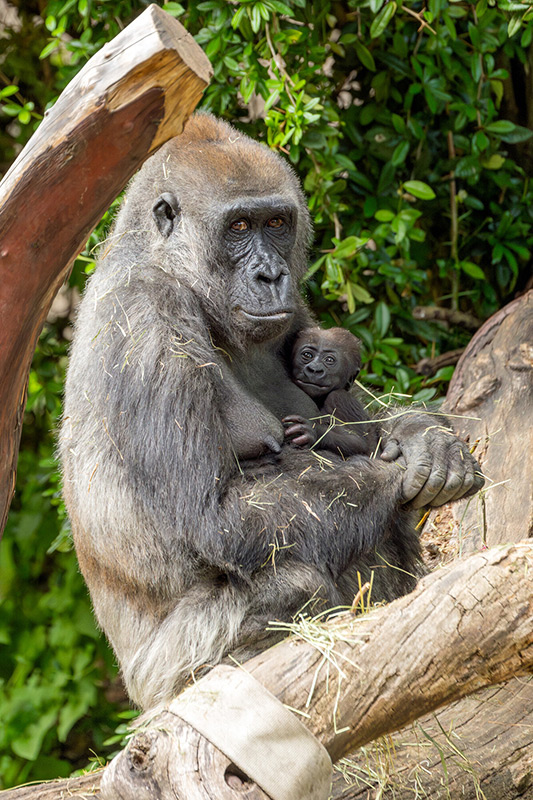
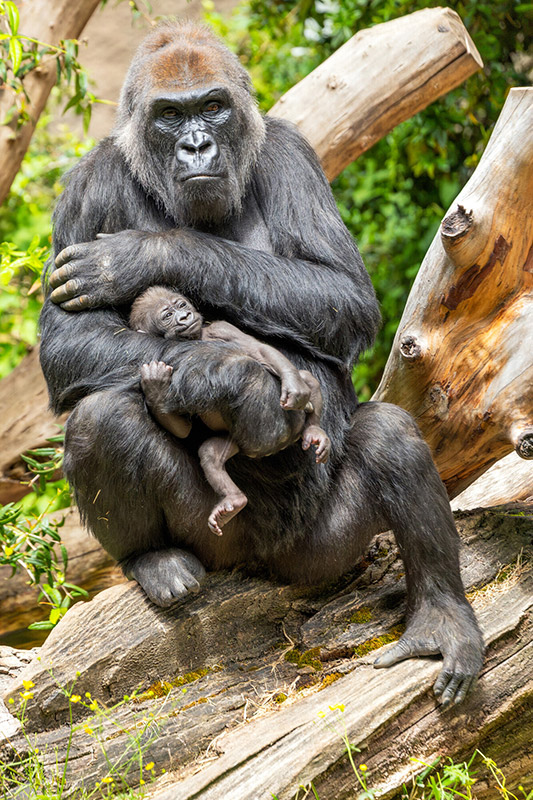
Left to right: Western lowland gorillas Olympia with baby Kadre and Jamani with baby Oku at Woodland Park Zoo. Zoo-goers can see the gorillas along the outside loop of the Tropical Rain Forest. (Beth Keplinger/Woodland Park Zoo)
With a little help from friends, Woodland Park Zoo’s western lowland baby gorillas, both males, have been officially named: Kadre (ka-DRAY) and Oku (OH-koo). The chosen names represent a portion of the range where western lowland gorillas live—in lowland tropical forests and swampy clearings in Central Africa.
Kadre was born on May 18 to mom Jamani (jah-MAW-nee). The opportunity to name him was given to Woodland Park Zoo Board member Jill Walker and her husband, Scott Walker, as a small token of gratitude for their long-time, generous support of the zoo. “We’re so honored to have the privilege of naming the baby gorilla. Kadre, meaning ‘helper’ and ‘supporter’ in the Mandinka language, feels fitting for this young ambassador who will help connect visitors to conservation and the future of gorillas,” said Jill Walker. Mandinka is spoken across West Africa.
Oku, the name of a mountain in Cameroon in Central Africa, was born on May 24 to mom Olympia by emergency C-section, the very first for a gorilla at Woodland Park Zoo in its 126-year history. Dr. Emily Norland, chief obstetrician-gynecologist at Swedish Medical Center who was on the surgical team that performed the C-section, was asked to name Oku.
Olympia’s baby, Oku, is being cared for by Jamani, and Jamani’s baby, Kadre, is being cared for by Olympia.
While Olympia was recovering from the C-section, Jamani pulled double duty caring for both babies, not an easy feat for a gorilla mom. However, a couple weeks later in early June, Jamani’s baby was not thriving and needed to spend a couple days in the zoo’s hospital under 24-hour veterinary care while learning how to bottle feed.
Once baby Kadre left the hospital, zoo staff put him in the hands of Olympia, who was more inclined to allow the gorilla keepers to help with bottle feeding if necessary. “We were presented with this rare opportunity and instead of returning Jamani’s baby to her care, we gave him to Olympia, and now both gorillas can care for and raise babies,” said Martin Ramirez, Curator of Mammalogy at Woodland Park Zoo. “The moms and babies get to remain close in the same family group and both moms have an infant to care for. Essentially, Olympia and Jamani have become foster moms to each other’s babies, and both are providing excellent maternal care.”
Olympia and Jamani have a shared history. They both gave birth for the first time in 2012 to sons just weeks apart while living together at North Carolina Zoo and successfully raised them together.
The new infants represent the first offspring for dad Nadaya. In addition to dad and the babies, Olympia and Jamani’s family troop also includes adult female Jumoke. Olympia, Jamani and Nadaya arrived at Woodland Park Zoo in 2022.
Woodland Park Zoo currently cares for 13 western lowland gorillas living in two separate family groups. Stay tuned to Woodland Park Zoo’s social media and/or zoo.org/animals/zoobabies for viewing and other updates.
Visitors can see Kadre and Oku and the zoo’s other gorillas living in two family groups in the gorilla habitat along the outside loop of the Tropical Rain Forest.
A portion of every visit and membership to Woodland Park Zoo supports saving wildlife in the Pacific Northwest and around the world, including protecting western lowland gorillas. Recycle old cell phones and other used handheld electronics through ECO-CELL at zoo.org/greenzoo to help preserve gorilla habitat. Adopt a gorilla: ZooParent adoptions help the zoo provide exceptional care for its gorillas and all its amazing animals: zoo.org/zooparent.
